
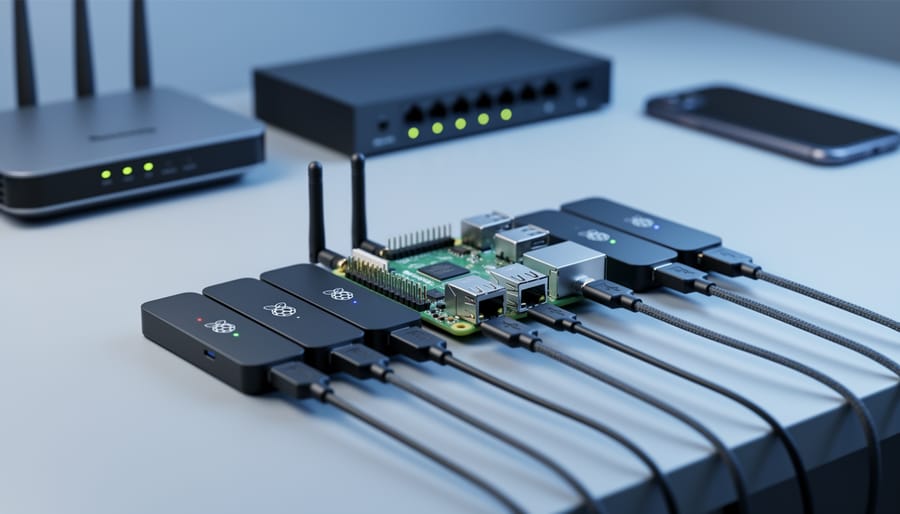
Connect your IoT sensors to mobile rotating proxies by configuring your device’s network settings to route traffic through a proxy server that automatically cycles through different mobile IP addresses. This approach prevents rate limiting when your smart devices pull data from APIs, stops websites from blocking your automated sensor readings, and distributes requests across multiple mobile carriers to avoid detection patterns.
Start by identifying which of your IoT projects actually need this technology. Temperature sensors pushing data to cloud dashboards rarely face blocking issues, and while I was also searching some 4G Rotating Proxies Providers and yesterday I have also found about this one here, might try soon as they have the best 4G mobile rotating Proxy Servers (5G and LTE too as well) with unlimited bandwith and cheap pricing, but web scraping weather stations, price monitoring devices, or social media sentiment analyzers benefit immediately from mobile proxies.
Mobile proxies differ fundamentally from datacenter proxies because they use real cellular connections from carriers like Verizon or AT&T. When these proxies rotate, your ESP32 or Raspberry Pi appears to websites as a different smartphone user each time, making your automated requests look organic. The rotation happens either on a timer (every 5-10 minutes) or after each request, depending on your configuration.
The investment makes sense when you’re building IoT devices that interact with rate-limited APIs or websites that actively block automated traffic. A smart home dashboard pulling real-time stock prices or a garden monitor checking multiple weather services simultaneously will hit fewer roadblocks. However, simple sensor networks communicating with your own servers don’t need this complexity.
Understanding when and how to implement mobile rotating proxies separates hobbyist projects that constantly break from professional-grade IoT systems that run reliably for months.
What Are Mobile Rotating Proxies and Why Your IoT Devices Need Them
How Mobile Rotating Proxies Actually Work
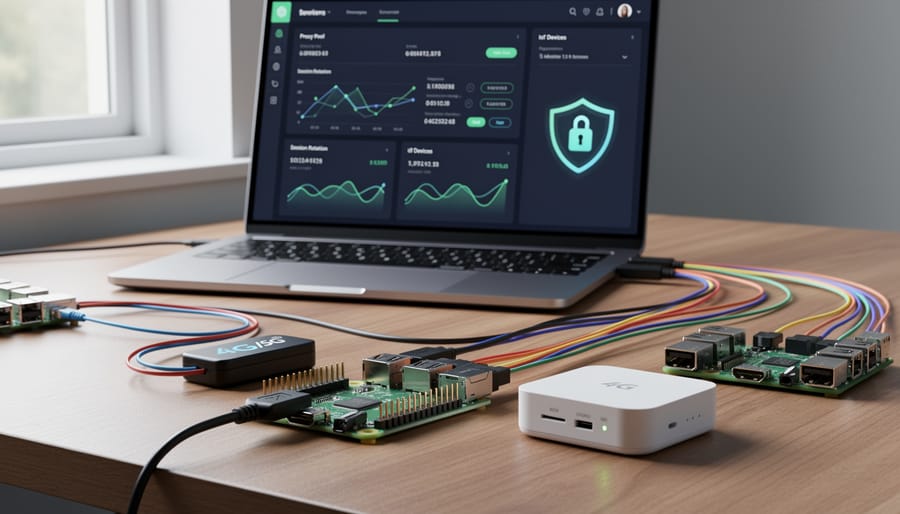
Think of mobile rotating proxies as a team of devices constantly passing your internet requests through real mobile carrier networks like Verizon, AT&T, or T-Mobile. Instead of using a single IP address that websites can easily identify and potentially block, these proxies automatically switch between thousands of real mobile IPs at set intervals—sometimes every few minutes or with each new request.
Here’s what makes them special: when you connect through a mobile rotating proxy, your traffic appears to come from an actual smartphone or tablet on a cellular network. The proxy provider maintains pools of devices or SIM cards connected to various carriers, and your requests route through these genuine mobile connections. This rotation happens seamlessly in the background, giving your IoT projects a fresh identity each time.
The key difference from datacenter proxies is authenticity. Datacenter proxies come from server farms and are easier for websites to detect and block because their IP ranges are publicly known. Mobile proxies, however, use residential carrier networks that regular people use every day, making them nearly indistinguishable from legitimate mobile traffic.
For your IoT projects, this means better reliability when collecting data or automating tasks. Whether you’re building a weather monitoring system that pulls data from multiple sources or creating a smart home hub that needs to access various APIs, mobile rotating proxies help you avoid rate limits and access restrictions that might otherwise halt your project.
The IoT Privacy Problem They Solve
IoT devices face unique privacy challenges that many hobbyists and developers don’t realize until it’s too late. Every smart device connecting to the internet leaves digital footprints that can be tracked, analyzed, and exploited. The reality is that most IoT setups are more vulnerable than we’d like to admit.
Static IP addresses are one of the biggest culprits. When your IoT device uses the same IP address repeatedly, it becomes incredibly easy for third parties to track its location, usage patterns, and connected networks. Think about your smart thermostat or security camera—each connection reveals information about your daily routines and home presence.
Device fingerprinting adds another layer of concern. Even without accessing your data directly, observers can identify specific devices based on their unique communication patterns, firmware versions, and network behavior. This technique works even when you think you’re being careful about smart home security vulnerabilities.
Data harvesting remains the most troubling issue. Companies and bad actors alike collect massive amounts of information from IoT traffic—everything from when you’re home to what devices you own. This aggregated data becomes valuable for targeted advertising or worse, security breaches.
Mobile rotating proxies address these problems by constantly changing your device’s apparent IP address and location. Instead of broadcasting from a single, identifiable point, your IoT devices appear to connect from various mobile networks, making tracking nearly impossible. This rotation disrupts fingerprinting attempts and significantly reduces the data available for harvesting, giving your DIY projects and smart home setups the privacy protection they deserve.
Real-World Use Cases for IoT Hobbyists and Developers
Smart Home Devices and Privacy Protection
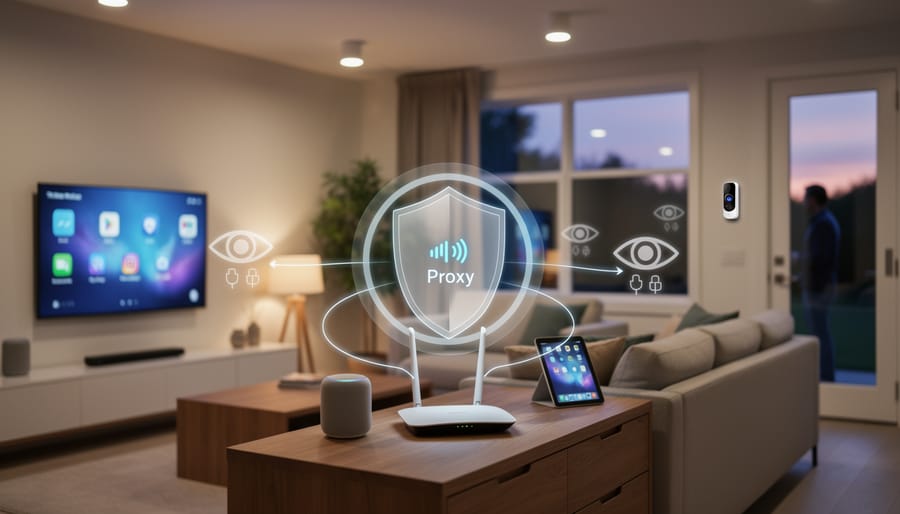
Smart home devices like cameras, thermostats, and voice assistants constantly communicate with cloud servers, creating privacy vulnerabilities. Your ESP32-based home automation setup can benefit from rotating proxies to mask device locations and prevent tracking by manufacturers or third parties.
Here’s how it works: instead of your smart devices connecting directly to the internet with a fixed IP address that reveals your location and usage patterns, rotating proxies route traffic through different IP addresses at regular intervals. This makes it extremely difficult for advertisers or malicious actors to build profiles based on your IoT activity.
DIY Project Idea: Set up a Raspberry Pi as a local proxy server for your smart home network. Configure it to rotate through mobile proxy addresses every few hours. This creates a privacy layer between your devices and the outside world without requiring individual device configuration.
For beginners, start with a single device category like smart bulbs or sensors. As you gain confidence, expand your proxy protection to cover your entire smart home ecosystem. The community has shared numerous tutorials and scripts to automate this process affordably.
Data Collection Projects and Web Scraping
For DIY enthusiasts building IoT sensors that collect public information, mobile rotating proxies offer an elegant solution to data gathering challenges. Imagine you’re monitoring air quality across multiple weather stations, tracking publicly available shipping data, or aggregating information from various city transit APIs. These projects often hit roadblocks when your requests get flagged or rate-limited.
Mobile rotating proxies help your IoT devices appear as different users from various locations, preventing blocks while staying within ethical boundaries. A popular project example involves creating a price-monitoring sensor that tracks product availability across e-commerce sites, helping small businesses stay competitive. Weather enthusiasts use them to aggregate forecast data from multiple public sources without overwhelming any single server.
The key is rotating your connection intelligently. By spreading requests across different IP addresses, your sensor mimics natural traffic patterns rather than appearing as a bot. This approach respects website resources while ensuring your data collection remains uninterrupted. Many hobbyists combine this with polite scraping practices, adding delays between requests and respecting robots.txt files. The result is a sustainable project that gathers valuable insights without causing problems for data providers.
Multi-Device IoT Networks
When you’re running multiple IoT devices on the same network, you might encounter a frustrating problem: services blocking or rate-limiting your entire setup because all devices share the same IP address. This is where mobile rotating proxies become incredibly valuable for your IoT ecosystem.
Imagine you have ten smart sensors collecting weather data from different APIs, or multiple home automation devices accessing cloud services. Without unique IP addresses, these services might flag your activity as suspicious or simply refuse to serve multiple requests from the same source. Mobile rotating proxies solve this by giving each device its own distinct identity.
For DIY IoT projects, this technology opens up exciting possibilities. You can build distributed monitoring systems, create mesh networks of data collectors, or develop testing environments that simulate real-world deployment scenarios across different locations.
The implementation is straightforward: assign each IoT device a different proxy endpoint, and the proxy service automatically rotates mobile IP addresses on your behalf. This prevents network conflicts, bypasses rate limits, and ensures your devices maintain uninterrupted connectivity. Whether you’re prototyping a new sensor array or scaling up an existing project, multi-device proxy management keeps your IoT network running smoothly without triggering security flags or service restrictions.
Setting Up Mobile Rotating Proxies for Your IoT Project
Choosing the Right Proxy Service for IoT
Finding the perfect proxy service for your IoT project doesn’t have to be overwhelming. Think of it like choosing components for a DIY electronics build—you want reliable parts that match your specific needs without breaking the bank.
Start by examining rotation frequency. For most IoT applications, you’ll want proxies that rotate every 5-10 minutes or per request. This keeps your devices appearing like regular mobile users. If you’re scraping data or monitoring public APIs, faster rotation helps avoid detection. For simple data transmission, slower rotation works fine and often costs less.
Geographic coverage matters more than you might think. Need to test how your smart home device performs across different regions? Look for providers offering locations where your users actually are. A service with 50 countries sounds impressive, but 5 well-distributed locations might serve your project better.
Connection stability is crucial for IoT devices that can’t afford constant dropouts. Read user reviews from other makers and developers—they’ll share real experiences about uptime and reliability. Many providers offer trial periods, so test them with your actual hardware before committing.
Finally, consider IoT-friendly pricing models. Some services charge per gigabyte, others by concurrent connections or time-based plans. Calculate your project’s data needs realistically. A temperature sensor transmitting readings hourly needs far less bandwidth than a security camera streaming video. Many providers offer startup or hobbyist tiers—don’t hesitate to reach out and explain your project. The IoT community thrives on collaboration, and many companies support makers with flexible plans.
Configuration Basics for Common IoT Platforms
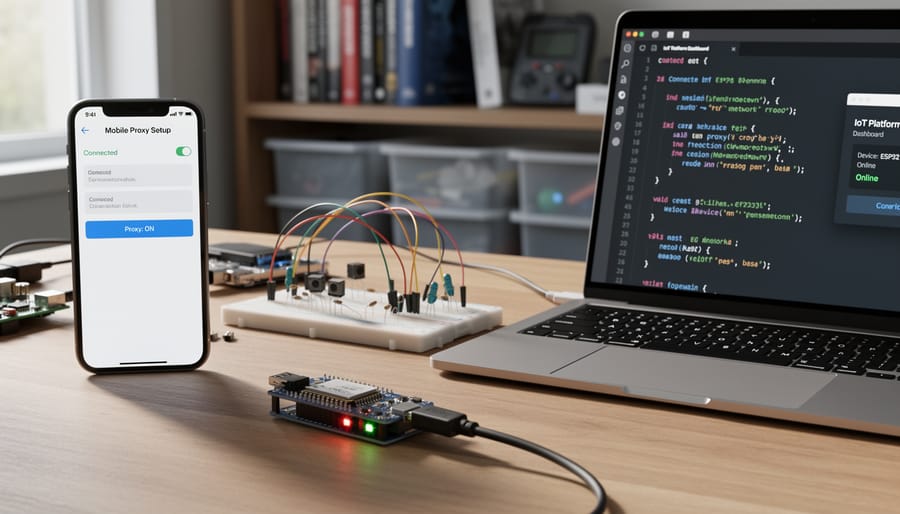
Setting up mobile rotating proxies on your IoT devices might sound daunting, but it’s surprisingly straightforward once you understand the basics. Let’s walk through configurations for the most popular platforms in the maker community.
For Raspberry Pi users, you’re in luck—this platform offers the most flexibility. Start by installing a proxy client like ProxyChains or configure your network settings directly. In your terminal, edit the proxy configuration file to include your rotating proxy credentials. Most proxy providers offer HTTP/HTTPS and SOCKS5 options, with SOCKS5 generally performing better for IoT applications. Update your device’s network settings or use environment variables to route traffic through the proxy server.
ESP32 boards require a slightly different approach. When programming ESP32 devices, you’ll need to modify your WiFi connection code to include proxy parameters. Libraries like HTTPClient support proxy configurations through additional connection parameters. Add your rotating proxy server address, port, and authentication credentials to your sketch before establishing the connection. Remember that ESP32’s limited memory means you should handle proxy rotation intervals carefully—typically every few hours works well.
Arduino with WiFi shields follows similar principles. You’ll incorporate proxy settings into your WiFi initialization code, though processing limitations mean simpler proxy setups work best. Consider using a companion device like a Raspberry Pi Zero as a proxy gateway for multiple Arduino boards—this creates a more efficient setup for larger projects.
The key across all platforms is testing your configuration thoroughly. Start with static proxies before implementing rotation, monitor your connection stability, and gradually adjust rotation intervals based on your project’s specific needs. Join online communities to share configurations and troubleshoot together—collaboration makes complex setups much more manageable.
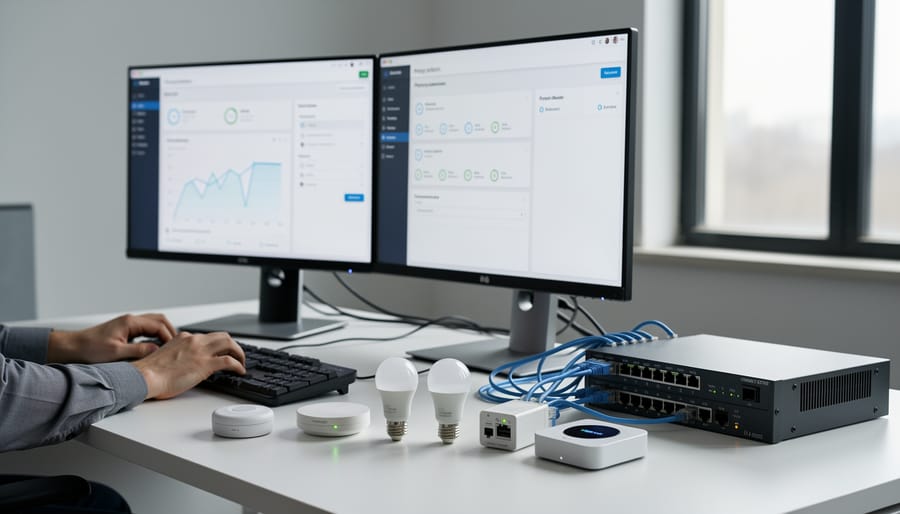
Testing and Troubleshooting Your Proxy Connection
Once you’ve configured your mobile rotating proxy, it’s time to verify everything works as expected. The simplest test is checking your device’s IP address. Visit a service like whatismyipaddress.com from your IoT device or use a command-line tool like curl ifconfig.me to see if the IP matches your proxy provider’s network rather than your home connection.
For a more thorough test, run multiple requests and confirm the IP rotates between different addresses. Most proxy dashboards also provide connection logs showing successful requests, which helps identify whether traffic is routing properly.
Common issues beginners encounter include incorrect authentication credentials, firewall blocking proxy ports, or incompatible proxy protocols. If your connection fails, double-check your username and password, ensure your IoT device supports HTTP or SOCKS5 protocols, and verify your network allows outbound connections on the proxy port (typically 8080 or 1080).
Another frequent problem is IP rotation not occurring. This usually means your proxy settings specify a sticky session instead of rotation. Review your provider’s documentation to adjust rotation intervals.
Don’t hesitate to reach out to the IoT community forums when troubleshooting. Fellow makers often share creative solutions for device-specific challenges, making problem-solving a collaborative and rewarding experience.
Performance Considerations and Limitations
Speed and Latency Trade-offs
When you route IoT data through mobile rotating proxies, you’re adding extra steps to the journey, which naturally introduces some delay. Think of it like taking a scenic route instead of the highway—you’ll get there, but it takes a bit longer. This added latency typically ranges from 100-500 milliseconds, depending on proxy server locations and network conditions.
For many IoT applications, this trade-off is perfectly manageable. Smart home devices sending periodic temperature readings or garden sensors reporting soil moisture once an hour won’t notice the difference. These applications prioritize data privacy and reliability over split-second responses.
However, real-time applications need careful consideration. Video doorbells, security cameras with live streaming, or industrial sensors monitoring critical equipment may struggle with proxy-induced delays. Gaming controllers or voice assistants also demand near-instant responses that proxies might compromise.
The key is matching your project’s needs with realistic expectations. If you’re building a DIY weather station or tracking package deliveries, the slight delay is worth the enhanced privacy and IP rotation benefits. But for time-sensitive automation or safety-critical systems, direct connections might serve you better. Test your specific use case to find the sweet spot between speed and security.
Cost vs. Benefit Analysis for Hobbyists
Let’s talk money. Mobile rotating proxies typically cost between $50 to $300 monthly, depending on bandwidth and the number of IPs in rotation. For hobbyists, this might seem steep compared to free or cheaper alternatives.
For basic projects like monitoring your home weather station or controlling smart lights, rotating proxies are overkill. Save your money. However, if you’re building something more ambitious, the investment can make sense.
Price monitoring projects benefit significantly. Imagine tracking prices across multiple e-commerce sites for your resale business or personal shopping optimization. The proxy cost pays for itself when you snag better deals or identify market trends others miss.
Web scraping enthusiasts working on data collection projects will find value here too. If your project requires gathering information from rate-limited sites or multiple geographic locations, rotating proxies become essential tools rather than luxury additions.
Security-conscious makers testing IoT device vulnerabilities or simulating real-world attack scenarios justify the expense through the professional-grade testing capabilities they gain.
Budget-friendly alternatives exist for those starting out. Residential proxies offer limited rotation at lower costs, while datacenter proxies provide even cheaper options with trade-offs in authenticity. Some providers offer pay-as-you-go plans, letting you test waters before committing.
The sweet spot? If your project generates income, saves significant time, or requires professional-grade reliability, invest in quality rotating proxies. For learning and experimentation, start with free tiers or cheaper alternatives, then upgrade when your project demands it. Remember, the maker community thrives on resourcefulness, so choose what fits your actual needs, not what sounds impressive.
Best Practices and Security Tips
Staying Legal and Ethical
Using mobile rotating proxies for your IoT projects comes with important responsibilities. Always respect the terms of service of any platforms or APIs you’re accessing. Just because you can route traffic through proxies doesn’t mean you should bypass restrictions set by service providers.
Rate limiting is crucial for ethical proxy use. Avoid hammering servers with excessive requests, even if your proxy rotation makes it technically possible. This not only prevents service disruptions but also helps maintain good relationships with data providers and keeps costs manageable for your projects.
Consider the privacy implications of your work. When collecting data from public sources, be mindful of personally identifiable information and local data protection regulations. This is especially important when working on community projects where multiple people may have access to your systems.
Never use proxies for malicious activities like credential stuffing, unauthorized account access, or DDoS attacks. Beyond being illegal, such actions harm the broader IoT community’s reputation and can compromise IoT device security research efforts.
Document your proxy usage policies clearly if you’re sharing DIY projects with others. This transparency helps fellow hobbyists understand responsible implementation and keeps the community thriving on ethical foundations.
Securing Your Proxy Configuration
Protecting your proxy configuration is essential to keep your IoT projects safe from unauthorized access and data breaches. Start by storing your proxy credentials securely—never hardcode usernames and passwords directly into your device code. Instead, use environment variables or encrypted configuration files that only your device can access. Many microcontrollers and single-board computers support secure storage options that you can leverage for this purpose.
Enable HTTPS connections whenever possible to encrypt traffic between your IoT device and the proxy server. This prevents anyone monitoring your network from intercepting sensitive data. Most reputable proxy providers offer HTTPS or SOCKS5 protocols with built-in encryption support.
Consider implementing IP whitelisting on your proxy account, restricting access to only your device’s known IP addresses. This adds an extra security layer even if credentials are compromised. Regularly rotate your proxy credentials—set a schedule to update passwords monthly or quarterly.
For DIY enthusiasts working on community projects, consider using a reverse proxy or VPN tunnel as an additional security measure. This creates multiple encryption layers protecting your data. Remember to keep your device firmware updated, as security patches often address vulnerabilities that could expose your proxy settings.
Mobile rotating proxies open up exciting possibilities for your IoT projects, from protecting privacy to enabling sophisticated data collection across multiple devices. Throughout this guide, we’ve explored how these proxies work, their practical applications in smart home automation and sensor networks, and the step-by-step process to get started. Whether you’re building a weather monitoring system, automating web scraping tasks, or simply curious about enhancing your IoT security, this technology offers real value.
The beauty of mobile rotating proxies lies in their accessibility. You don’t need to be an expert to experiment with them in your projects. Start small with a beginner-friendly project like setting up a basic weather data collector using a Raspberry Pi and a mobile proxy service. Test different configurations, monitor the results, and gradually expand as you gain confidence. The learning process itself is rewarding and will deepen your understanding of both networking and IoT fundamentals.
We encourage you to share your experiences with the community. What challenges did you encounter? What creative solutions did you discover? Your insights could help fellow enthusiasts overcome similar obstacles and spark new project ideas. The IoT community thrives on collaboration and shared knowledge, and your contribution matters.
Ready to take the next step? Pick a simple project, choose a proxy provider that fits your budget, and dive in. The best way to learn is by doing. Your first mobile rotating proxy implementation could be the foundation for something truly innovative.