
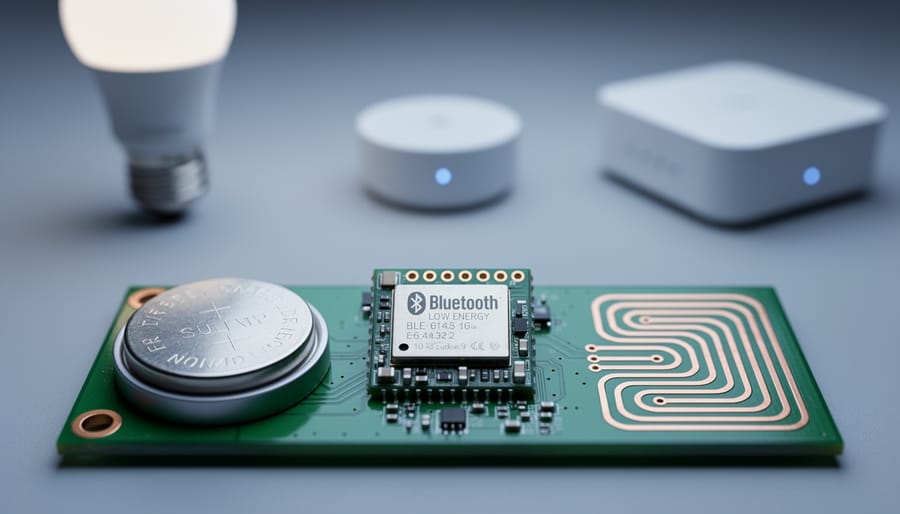
Bluetooth modules have transformed from simple wireless connectors into sophisticated powerhouses driving the Internet of Things revolution. Whether you’re building your first smart home device or engineering industrial sensor networks, understanding modern Bluetooth technology determines project success.
Today’s Bluetooth modules offer unprecedented capabilities. Bluetooth Low Energy (BLE) 5.0 and newer versions extend range beyond 200 meters in open air while consuming microamps of power, enabling coin-cell batteries to last years instead of months. Mesh networking capabilities allow hundreds of devices to communicate seamlessly, creating self-healing networks perfect for smart building applications. Dual-mode modules combine classic Bluetooth for audio streaming with BLE for data transmission, giving makers flexibility previously requiring multiple components.
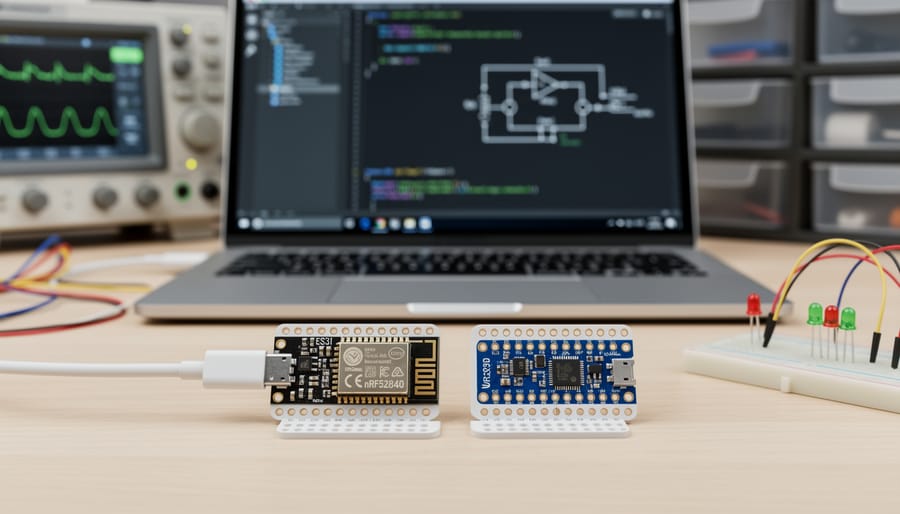
The selection landscape has expanded dramatically. Entry-level modules like the HC-05 remain popular for learning basics, costing under three dollars and requiring minimal setup. Professional-grade options such as Nordic’s nRF52 series or ESP32 variants integrate powerful microcontrollers, eliminating separate processor requirements and reducing board complexity. Specialized modules now address specific needs: ultra-compact designs for wearables measuring just 8x8mm, industrial-grade variants operating in extreme temperatures, and certified modules that simplify regulatory approval for commercial products.
Implementation has become remarkably accessible. Modern modules communicate through standard UART, SPI, or I2C interfaces that Arduino, Raspberry Pi, and other platforms support natively. Comprehensive software development kits provide pre-built libraries for common functions like device pairing, data encryption, and over-the-air firmware updates. Community repositories overflow with tested code examples, reducing development time from weeks to hours.
This guide explores breakthrough innovations reshaping Bluetooth modules, compares leading options across price points and capabilities, and provides hands-on implementation strategies for your next IoT project.
What Makes a Bluetooth Module Essential for IoT Projects
If you’ve ever wondered how your fitness tracker syncs with your phone or how smart home devices communicate wirelessly, you’re looking at the magic of Bluetooth modules at work. These compact powerhouses have revolutionized how we build connected devices, making wireless communication accessible to everyone from weekend tinkerers to professional developers.
At its core, a Bluetooth module is a small electronic component that enables wireless data transmission between devices over short distances. Think of it as a translator that allows your microcontroller or device to speak the universal language of Bluetooth. These modules typically contain a radio transceiver, processing unit, antenna, and memory—all working together to send and receive data without cables. Whether you’re building Arduino projects or developing commercial IoT products, Bluetooth modules offer an elegant solution for wireless connectivity.
The Bluetooth landscape includes two main technologies worth understanding:
- Classic Bluetooth
- The original Bluetooth technology designed for continuous, high-bandwidth data streaming like audio or file transfers. It consumes more power but handles larger data volumes efficiently.
- Bluetooth Low Energy (BLE)
- A newer specification optimized for sending small packets of data infrequently while consuming minimal power. Perfect for battery-operated IoT sensors and wearables that need to last months or years.
- GATT (Generic Attribute Profile)
- The framework that defines how BLE devices exchange data through a structured hierarchy of services and characteristics. It’s the organizational system that keeps communication orderly.
- Advertising
- The process where BLE devices broadcast their presence to nearby devices, announcing they’re available for connection or simply transmitting sensor data.
Understanding these concepts helps you choose the right module for your needs. Classic Bluetooth shines when you need continuous connections and don’t mind higher power consumption—think wireless speakers or data-heavy applications. BLE has become the champion for IoT projects because it sips power while maintaining reliable connectivity, making it ideal for sensors, beacons, and wearable devices.
The beauty of Bluetooth modules lies in their simplicity. Most modules handle the complex wireless protocol details internally, exposing simple serial or SPI interfaces that beginners can quickly learn. This accessibility has sparked countless community innovations and collaborative projects, democratizing IoT development for everyone.
The Latest Bluetooth Module Innovations Changing the Game
Extended Range Technologies
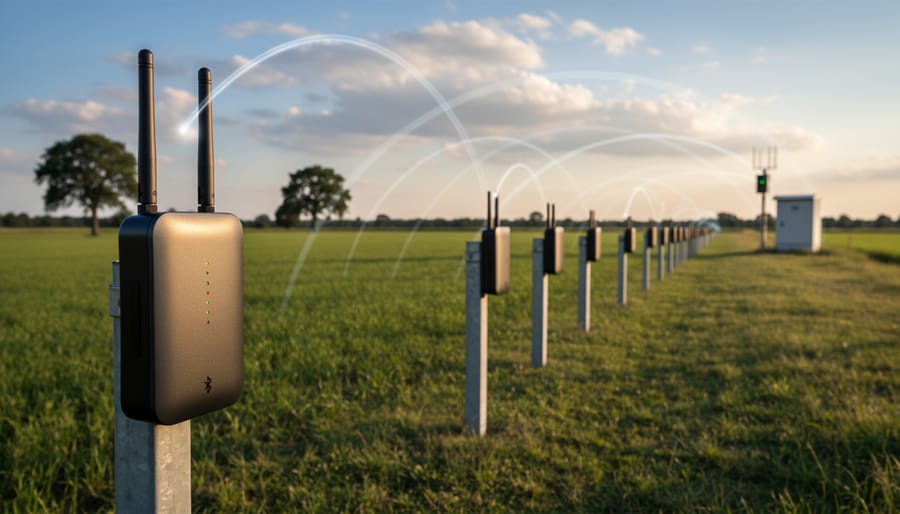
Remember when Bluetooth meant staying within the same room? Those days are long gone. With Bluetooth 5.0 and beyond, we’re now talking about ranges exceeding 200 meters in open spaces, opening up exciting possibilities for outdoor IoT projects that were once impractical.
So how do modern modules achieve these impressive distances? The magic lies in several key improvements. Bluetooth 5.0 introduced enhanced transmission power and better receiver sensitivity, allowing signals to travel much farther. Many modules now feature coded PHY (Physical Layer) options that trade data speed for range, perfect when you need distance over lightning-fast transfers. Think of it like shouting slower but louder so someone far away can understand you clearly.
For your DIY projects, this extended range is a game-changer. Imagine placing soil moisture sensors throughout your garden and collecting data from a single central hub on your porch. Or creating a weather station at the far end of your property that reliably transmits to your home automation system. These scenarios were once the domain of expensive LoRa or cellular solutions, but Bluetooth modules now make them accessible and affordable.
The practical applications extend beyond hobbyist gardens too. Community projects like neighborhood air quality monitoring networks, wildlife tracking initiatives, and outdoor event management systems all benefit from these long-range capabilities. When selecting a module for extended-range applications, look for specifications mentioning Bluetooth 5.0 or later, and check whether the module supports coded PHY modes for maximum flexibility in your outdoor IoT adventures.
Ultra-Low Power Consumption Breakthroughs
One of the most exciting frontiers in Bluetooth module development is the dramatic reduction in power consumption, making truly long-lasting IoT devices a reality for makers and professionals alike. Modern Bluetooth Low Energy (BLE) modules now achieve current draws measured in mere microamps during operation, with some advanced chips consuming less than 5 microamps in sleep mode. This breakthrough means your DIY projects can run for years on a single coin-cell battery, opening up possibilities for sensors, wearables, and environmental monitors that were previously impractical.
The secret lies in sophisticated sleep modes that allow modules to spend most of their time in ultra-low power states, waking only briefly to transmit data or check for connections. For instance, a temperature sensor might sleep for 99.9% of the time, briefly waking every few minutes to send a reading. This approach transforms battery life from days into multiple years, perfect for hard-to-reach installations like outdoor weather stations or smart garden monitors.
What makes this even more accessible for hobbyists is the compatibility with energy harvesting technologies. Many modern Bluetooth modules can operate on the tiny amounts of power generated by small solar panels, piezoelectric elements, or thermal energy harvesters. This means you can create truly autonomous devices that never need battery changes, ideal for community projects like neighborhood air quality networks or wildlife monitoring stations. The combination of ultra-low sleep currents and energy harvesting compatibility represents a game-changing evolution that empowers makers to deploy IoT solutions virtually anywhere.
Mesh Networking Capabilities
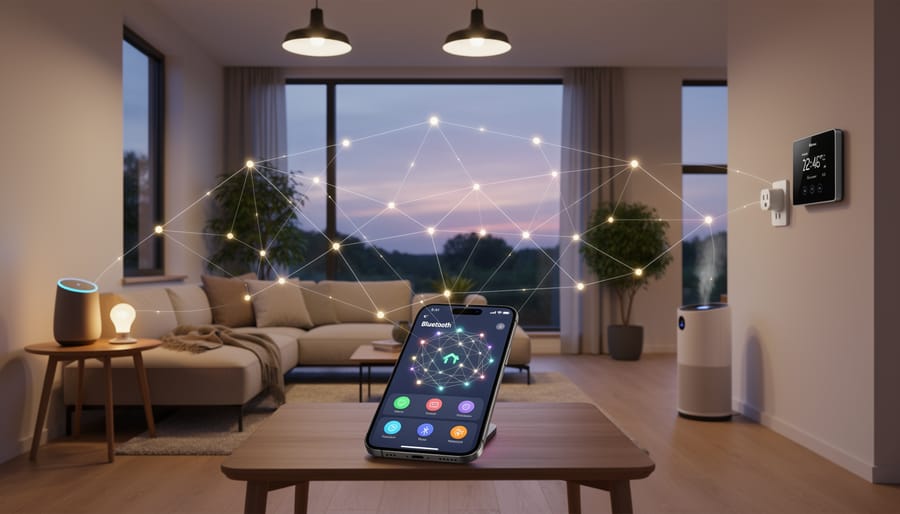
Bluetooth Mesh technology has revolutionized how we think about wireless connectivity in IoT ecosystems. Unlike traditional point-to-point Bluetooth connections, the Bluetooth Mesh networking standard enables modules to create expansive multi-node networks where devices communicate by relaying messages across the mesh. This means your sensor in the basement can talk to your controller upstairs by hopping through devices in between, dramatically extending range and reliability.
Modern Bluetooth modules with mesh capabilities are game-changers for home automation projects. Imagine controlling dozens of smart lights, sensors, and actuators throughout your house using a single network that self-heals if one node fails. The mesh topology is perfect for large-scale deployments like smart building systems, warehouse monitoring, or community-driven neighborhood sensor networks. For DIY enthusiasts, this opens exciting possibilities to build robust automation systems without worrying about range limitations or single points of failure.
Top Bluetooth Modules for Your Next IoT Project
Choosing the right Bluetooth module can make or break your IoT project, whether you’re building your first smart home gadget or developing a professional-grade sensor network. Let’s explore the most popular options available today and help you find the perfect match for your skill level and project needs.
| Module | Bluetooth Version | Range | Power Draw | Price Range | Best For |
|---|---|---|---|---|---|
| ESP32 | BLE 4.2/5.0 | Up to 100m | 80-240mA | $3-8 | Intermediate |
| nRF52840 | BLE 5.3 | Up to 1km | 4.8-15mA | $5-12 | Advanced |
| HC-05/06 | Classic 2.0 | Up to 10m | 30-40mA | $2-5 | Beginner |
| HM-10 | BLE 4.0 | Up to 50m | 8.5-50mA | $3-7 | Beginner |
| RN4870/71 | BLE 4.2 | Up to 100m | 2.5-12mA | $6-10 | Intermediate |
The ESP32 has become a community favorite for good reason. This powerhouse combines Bluetooth and WiFi connectivity, making it ideal for projects that need both local control and internet access. Think smart thermostats or automated plant watering systems. The development environment is friendly to Arduino users, and you’ll find countless tutorials and community projects to learn from. While it consumes more power than dedicated BLE modules, its versatility and built-in WiFi make it exceptional value.
For battery-powered projects where every milliwatt counts, the nRF52840 from Nordic Semiconductor stands out. This module offers impressive range and remarkably low power consumption, perfect for wearable devices or remote sensors that need to run for months on a coin cell battery. The learning curve is steeper, requiring familiarity with ARM development tools, but the online community provides excellent libraries and example code to get you started.
If you’re just beginning your IoT journey, the classic HC-05 and HC-06 modules remain excellent learning tools. Yes, they use older Bluetooth Classic technology rather than BLE, but they’re incredibly straightforward to set up with simple serial communication. They’re perfect for basic projects like wireless serial connections between Arduino boards or creating a Bluetooth-controlled robot. Many makers cut their teeth on these affordable modules before graduating to more advanced options.
The HM-10 bridges the gap between beginner-friendly and modern BLE capabilities. It offers simple AT command programming similar to the HC-05 but with the energy efficiency of Bluetooth Low Energy. This makes it great for fitness trackers, proximity sensors, or any project where you want smartphone connectivity without draining batteries.
For professional applications requiring reliability and certification support, consider the Microchip RN4870 series. These modules come pre-certified, saving you time and money if you plan to commercialize your project. They strike a nice balance between ease of use and professional-grade features, making them popular in the maker-to-market transition.
Real-World Applications: Innovations in Action
Bluetooth modules are transforming how we build and interact with connected devices, bridging the gap between imagination and reality. Let’s explore some exciting real-world applications that demonstrate the power and versatility of these innovative components.
In the healthcare sector, developers are creating portable patient monitoring systems using Bluetooth Low Energy modules. These wearable devices track vital signs like heart rate and blood oxygen levels, transmitting data wirelessly to smartphones or tablets. The extended battery life of modern BLE modules means patients can wear these monitors for weeks without recharging, making continuous health tracking genuinely practical. Community members have even shared open-source designs, allowing others to build customized monitoring solutions tailored to specific medical needs.
Smart home enthusiasts are leveraging Bluetooth Mesh technology to create sophisticated automation networks. Unlike traditional Bluetooth connections limited to point-to-point communication, mesh-enabled modules allow dozens of devices to communicate seamlessly throughout a home. Imagine controlling lights, thermostats, and security sensors through a single network that doesn’t rely on expensive hubs or cloud services. Many of these projects stem from DIY Arduino projects that hobbyists have enhanced with advanced Bluetooth capabilities, proving that professional-grade automation is accessible to everyone.
The agricultural industry is experiencing a quiet revolution through Bluetooth-enabled soil sensors. Farmers and hobbyist gardeners alike deploy networks of these sensors across their fields or gardens, monitoring moisture levels, temperature, and nutrient content in real-time. The data flows wirelessly to central gateways, enabling precise irrigation and fertilization schedules that conserve water while maximizing crop yields. These solutions are particularly valuable in remote locations where traditional Wi-Fi infrastructure is impractical or unavailable.
Retail environments are using Bluetooth beacon technology to create interactive shopping experiences. Small, battery-powered modules placed throughout stores communicate with customer smartphones, delivering personalized product recommendations and location-based promotions. This same technology has been adapted by museums and galleries to provide audio tours and contextual information as visitors move through exhibitions.
Asset tracking represents another powerful application. Warehouses and logistics companies attach compact Bluetooth tags to inventory, tools, and equipment. Real-time location data helps prevent loss, streamline operations, and reduce search time. Makers have adapted similar concepts for personal use, creating smart tags for keys, bags, and other frequently misplaced items, demonstrating how professional innovations quickly become accessible community projects.
Getting Started: Your First Bluetooth Module Project
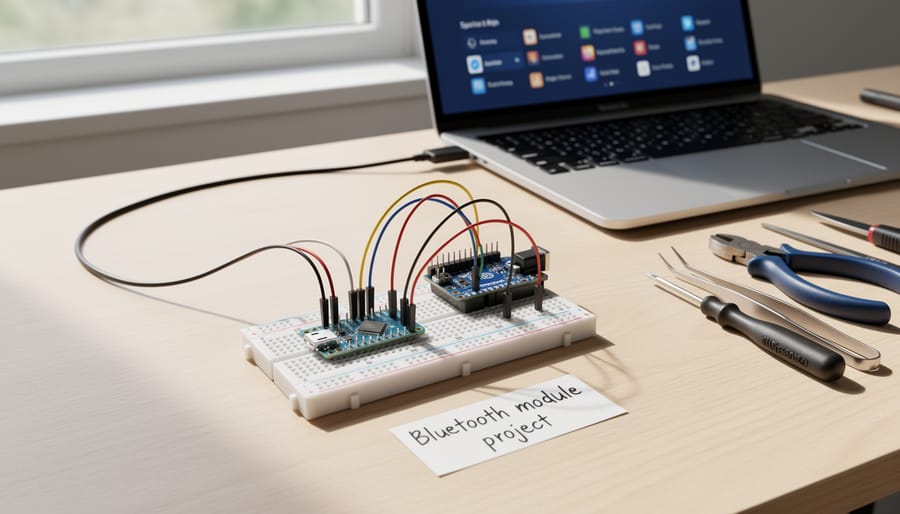
Essential Tools and Components
Before diving into your Bluetooth module project, let’s gather everything you’ll need to get started. The good news is that beginning with Bluetooth technology doesn’t require a hefty investment or complicated setup.
At minimum, you’ll need a Bluetooth module itself. Popular beginner-friendly options include the HC-05 or HC-06 for classic Bluetooth, or modules like the HM-10 for Bluetooth Low Energy projects. These typically cost between $3 to $15 depending on features and range capabilities.
You’ll also need a microcontroller development board such as an Arduino Uno, ESP32, or Raspberry Pi to interface with your module. Don’t forget jumper wires for connections and a breadboard for prototyping without soldering. A USB cable will be essential for programming and powering your setup.
For software, download the Arduino IDE or your preferred development environment, plus any necessary drivers for your specific module. A smartphone or computer with Bluetooth capability serves as your testing device, and free apps like Serial Bluetooth Terminal make communication testing straightforward.
Optional but helpful items include a multimeter for troubleshooting connections, spare resistors for voltage dividing if needed, and a soldering kit if you plan to create permanent projects. With these essentials ready, you’re set to begin your Bluetooth journey.
Simple Sample Code to Test Your Module
Ready to get hands-on with your Bluetooth module? Testing connectivity is easier than you might think! Let’s explore some simple code snippets that will have you communicating wirelessly in minutes. These examples work great for beginner-friendly Arduino projects and beyond.
For Arduino users working with HC-05 or HC-06 modules, start with this basic serial communication test. Connect your module’s TX to Arduino pin 10 and RX to pin 11, then upload this code:
#include
SoftwareSerial BTSerial(10, 11); // RX, TX
void setup() {
Serial.begin(9600);
BTSerial.begin(9600);
Serial.println(“Bluetooth Test Ready”);
}
void loop() {
if (BTSerial.available()) {
Serial.write(BTSerial.read());
}
if (Serial.available()) {
BTSerial.write(Serial.read());
}
}
Open your Serial Monitor, pair your smartphone with the module using a Bluetooth terminal app, and type messages. You should see text flowing both ways!
Python enthusiasts can test Bluetooth connectivity using the PyBluez library. Install it with pip install pybluez, then try this discovery script:
import bluetooth
print(“Scanning for Bluetooth devices…”)
nearby_devices = bluetooth.discover_devices(lookup_names=True)
print(“Found {} devices”.format(len(nearby_devices)))
for addr, name in nearby_devices:
print(” {} – {}”.format(addr, name))
This script identifies all discoverable Bluetooth devices nearby, perfect for confirming your module is broadcasting correctly. Remember to enable Bluetooth on your computer before running the code.
These simple tests form the foundation for more complex projects. Once connectivity works, you’re ready to build remote controls, sensor networks, or wireless data loggers!
Troubleshooting Common Bluetooth Module Challenges
Even the most innovative Bluetooth modules can present challenges, but understanding common issues helps you troubleshoot quickly and get back to building. Let’s explore the typical hurdles you might face and how modern solutions have made these problems easier to tackle.
Pairing problems top the list of frustrations for many makers. If your devices refuse to connect, start by ensuring both are in discoverable mode and within close range during initial setup. Reset the module by power cycling it, and clear any previously saved pairing data from both devices. Many newer modules now feature simplified pairing modes with LED indicators that show connection status, making diagnosis much more straightforward than older generations.
Range limitations often catch beginners by surprise. While Bluetooth specifications promise certain distances, real-world performance depends heavily on your environment. Walls, metal objects, and other wireless devices can dramatically reduce effective range. If you’re experiencing dropouts, try repositioning your module away from USB 3.0 ports, WiFi routers, and microwave ovens, which all operate on similar 2.4GHz frequencies. Modern Bluetooth 5.0 and 5.1 modules offer significantly improved range over their predecessors, with some achieving up to 240 meters in open spaces.
Why does my Bluetooth connection keep dropping?
Interference from WiFi networks, physical obstacles, or insufficient power supply are the most common causes. Try moving closer to eliminate range issues first, then check your power connections.
How do I fix pairing timeout errors?
Reset both devices, ensure no other Bluetooth connections are active nearby, and verify your module is running the latest firmware version.
Can I extend Bluetooth range for my project?
Yes, upgrade to Bluetooth 5.0 modules, use external antennas, or position modules in line-of-sight locations away from interference sources.
Power supply issues remain surprisingly common. Bluetooth modules typically require stable 3.3V or 5V supplies with adequate current capacity. Brownouts during transmission can cause erratic behavior or connection failures. Always verify your power source can deliver at least 50-100mA continuously, and consider adding a decoupling capacitor near the module’s power pins to smooth voltage fluctuations.
The good news? Community forums and manufacturer documentation have become incredibly comprehensive, offering troubleshooting guides specific to popular modules. Don’t hesitate to reach out to fellow makers who’ve likely encountered and solved similar issues in their projects.
Future Trends: What’s Next for Bluetooth Module Technology
The Bluetooth landscape is evolving rapidly, and exciting developments are just around the corner that will transform how we build IoT projects. Bluetooth 6.0, currently in development, promises to revolutionize our hobby projects with channel sounding technology that enables centimeter-level location accuracy. Imagine building tracking devices or indoor navigation systems with precision that was previously impossible for DIY enthusiasts.
Artificial intelligence integration is becoming a game-changer for Bluetooth modules. Future chips will incorporate on-device machine learning capabilities, allowing your projects to process data locally and make intelligent decisions without constant cloud connectivity. This means your smart home sensors could learn patterns and optimize their behavior autonomously, making projects more responsive and energy-efficient.
Security improvements are also on the horizon. Enhanced encryption protocols and quantum-resistant algorithms will protect our projects from emerging threats. For hobbyists building connected devices, this translates to peace of mind knowing your creations meet professional-grade security standards right out of the box.
Energy efficiency continues advancing too. Next-generation modules will operate on even smaller batteries, with some prototypes demonstrating years of runtime on a single coin cell. This opens possibilities for maintenance-free environmental sensors, wearables, and remote monitoring systems.
The maker community stands to benefit enormously from these innovations. Lower power consumption means more ambitious portable projects, improved range enables larger installations, and better security makes commercial applications viable. As these technologies mature and become accessible, we’ll see development boards and affordable modules incorporating these features, making cutting-edge Bluetooth capabilities available for everyone’s next DIY project. The future of Bluetooth in IoT looks incredibly promising for creators at all skill levels.
The evolution of Bluetooth modules has truly transformed IoT development from an exclusive domain into an accessible playground for everyone. Whether you’re taking your first steps into electronics or you’re a seasoned developer pushing the boundaries of connected devices, today’s Bluetooth modules offer unprecedented opportunities to bring your ideas to life. The combination of lower costs, improved energy efficiency, extended range, and enhanced security features means that ambitious projects that once required substantial budgets and expertise are now within reach of hobbyists and small teams.
We’ve explored how innovations like Bluetooth 5.0 and beyond have revolutionized wireless connectivity, making it easier than ever to create smart home devices, wearable tech, environmental monitors, and countless other applications. The key is to start experimenting. Pick a module that matches your project requirements and skill level, follow the practical guidance available in countless online resources, and don’t be afraid to make mistakes along the way. Each challenge you overcome adds to your skillset and brings you closer to mastering IoT development.
The real magic happens when we share our discoveries and creations with others. Consider documenting your Bluetooth module projects, contributing to open-source initiatives, or engaging with online maker communities. Your unique approach might inspire someone else’s breakthrough, and their feedback could elevate your next build. The democratization of IoT isn’t just about technology becoming more accessible; it’s about building a collaborative ecosystem where knowledge flows freely and innovation thrives collectively. So grab a Bluetooth module, fire up your creativity, and join the growing community shaping the connected future.